Jack Boss — Bottle Jack
Built for Mechanics Who Refuse to Compromise on Safety
Jack Boss Bottle Jack equipment serves a specific community — automotive professionals who spend their days under vehicles and DIY enthusiasts who demand the same reliability in their home garages. Since 1954, the Ontario, California-based manufacturer has focused exclusively on lifting solutions that meet the rigorous demands of real-world automotive work. The brand's mission centers on empowering those who work with their hands, providing tools that perform under pressure and protect users from the inherent risks of vehicle lifting.
The target audience includes home mechanics tackling weekend brake jobs, professional auto repair technicians working on tight shop deadlines, and motorcycle owners who need compact lifting solutions. These users share a common requirement: equipment that lifts confidently, holds securely, and operates without hesitation. Jack Boss addresses this through ANSI/ASME PASE safety certification on every unit, ensuring each bottle jack meets or exceeds established industry standards for hydraulic lifting devices.
Whether the task involves changing tires on a family sedan, performing undercarriage inspections on a lifted pickup truck, or supporting vehicles during complex suspension repairs, the brand delivers purpose-built solutions. The product line spans from compact 2-ton units for motorcycles and passenger cars to heavy-duty 20-ton models capable of handling commercial trucks and RVs. This range ensures that every user, from the occasional DIYer to the seasoned shop technician, finds a bottle jack matched to their specific lifting requirements.
From Compact 2-Ton Units to Heavy-Duty 20-Ton Powerhouses
The complete product range addresses virtually every vehicle lifting scenario encountered in automotive work. Compact hydraulic bottle jacks start at 2-ton capacity, sized perfectly for motorcycles, ATVs, and lightweight passenger vehicles. Mid-range options in 4-ton and 6-ton configurations handle the bulk of sedan, SUV, and crossover lifting needs. The lineup extends through 8-ton, 10-ton, and 12-ton models designed for full-size trucks and commercial vehicles.
At the top of the range, 20-ton bottle jacks provide the lifting muscle required for RVs, heavy-duty trucks, and industrial applications. Every model in the collection features the same core engineering principles: welded steel construction, adjustable height screws for precise positioning, and integrated automatic safety valves. Low-profile designs starting at 3.5 inches ensure compatibility with modern vehicles that sit closer to the ground, eliminating the frustration of jacks that simply cannot fit beneath low-clearance frames.
This breadth of options allows users to select equipment matched precisely to their vehicle weight and lifting height requirements. A motorcycle enthusiast working in a cramped garage space benefits from the compact footprint of smaller units, while a diesel mechanic servicing fleet vehicles relies on the substantial lifting power of heavy-duty models. The collection spans these extremes without sacrificing the quality standards applied across every capacity rating.
Dual Piston Quick Lift Technology — Engineering That Saves Time
The proprietary dual piston hydraulic quick lift pump system represents the core engineering advancement that separates these bottle jacks from conventional single-pump designs. Traditional hydraulic jacks require numerous pump strokes to achieve full lifting height, consuming valuable time during every tire change or repair job. The dual piston system delivers lifting speeds up to five times faster than single pump alternatives, dramatically reducing the physical effort and time investment required for routine tasks.
This quick lift technology operates through two synchronized pistons working in tandem within the pump mechanism. The design maintains full lifting force while accelerating the rate at which hydraulic fluid displaces into the main cylinder. Users experience fewer pump strokes from ground to full extension, which translates directly into reduced arm fatigue during extended work sessions. For professional technicians completing multiple vehicle lifts daily, this efficiency compounds into significant time savings.
Complementing the speed advantage, the automatic safety bypass valve provides critical protection during operation. When load conditions approach or exceed rated capacity, the bypass activates automatically, preventing catastrophic failure. This engineered safeguard protects both the user and the equipment, ensuring that even in situations where loads are misjudged, the jack responds predictably rather than dangerously. The combination of speed and safety-focused engineering reflects the design philosophy applied throughout the product line.
Jack Boss Bottle Jack Features That Deliver Professional Results
- Dual Piston Quick Lift Pump Achieves lifting speeds up to 5 times faster than single pump jacks, reducing physical effort and completing lifts in fewer strokes.
- Automatic Safety Bypass Valve Activates instantly when overload conditions occur, preventing equipment failure and protecting users from dangerous situations.
- Welded Steel Construction Heavy-duty welded frames paired with drop forged alloyed materials provide maximum durability and resistance to workplace abuse.
- Corrosion Resistant Finish Protective coatings on all metal surfaces prevent rust formation even in humid garage environments or outdoor use.
- Adjustable Screw Top Extension Built-in threaded extension adds height versatility, allowing precise contact with various lift points without additional accessories.
- Low Profile Options Designs starting at 3.5 inches minimum height fit beneath low-clearance vehicles that defeat conventional bottle jacks.
- ANSI/ASME PASE Certification Every unit meets rigorous industry safety standards, verified through independent testing protocols for hydraulic lifting equipment.
The 12-Ton and 6-Ton Models Trusted by Professionals Daily
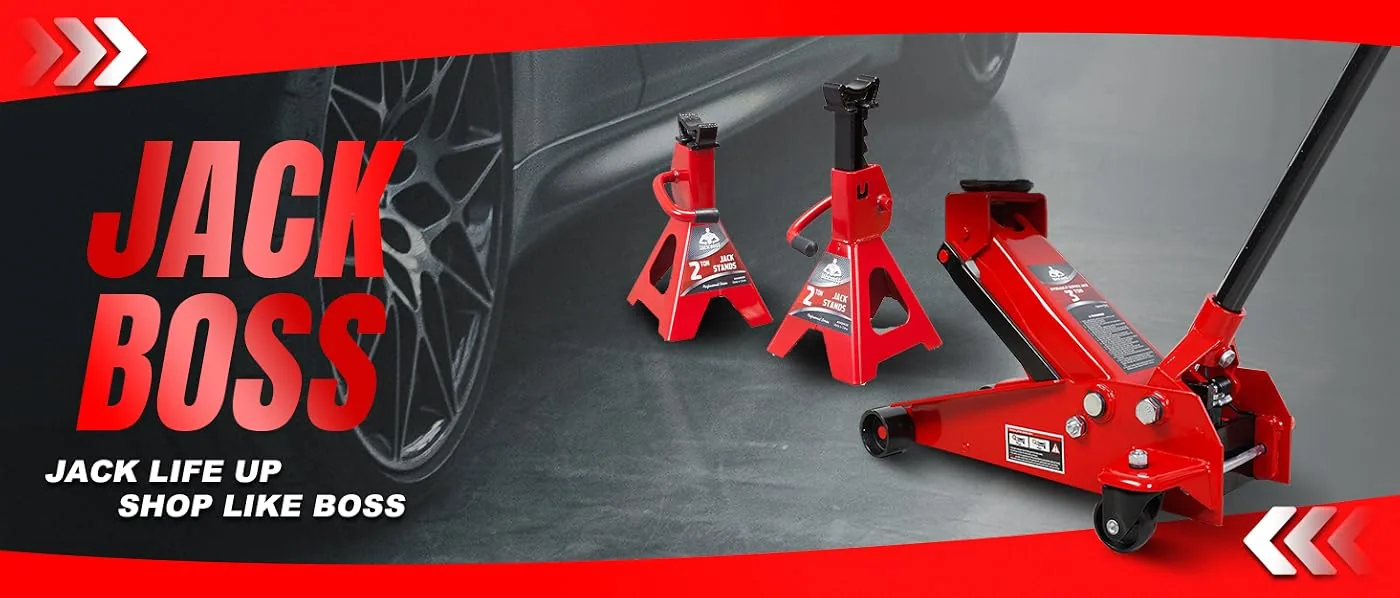
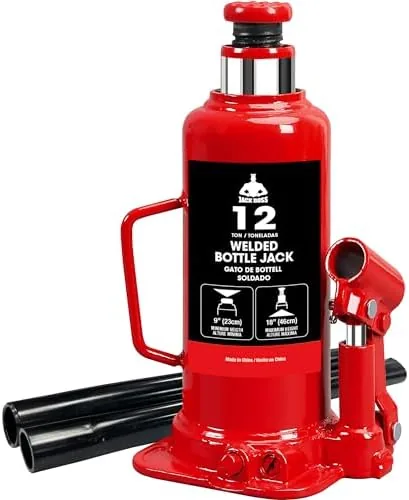
The Jack Boss Bottle Jack 12 Ton model stands as the flagship product for users requiring serious lifting capacity. With 24,000 pounds of rated force, this unit handles full-size pickup trucks, SUVs, and commercial vehicles with confidence. The 9-inch minimum height extends to 18 inches at full stroke, providing substantial lift range for undercarriage access. At 13.23 pounds, the jack remains portable enough for field service calls while delivering shop-grade performance.
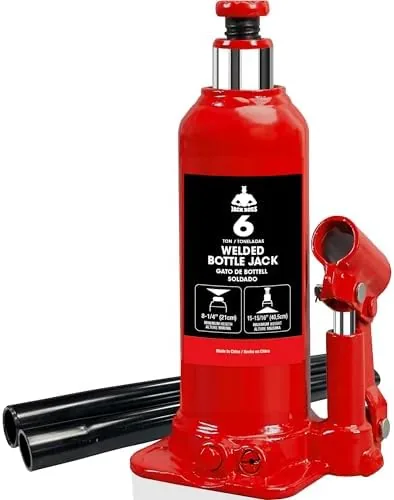
For lighter-duty applications, the 6-Ton model (AS90604B) offers an ideal balance of capability and compact dimensions. This jack provides 13,200 pounds of lifting capacity in a package weighing just 8.2 pounds. The 8.25-inch minimum height extends to nearly 16 inches, accommodating most sedans, crossovers, and compact SUVs. Both models include the adjustable screw top extension that adds versatility when positioning against various vehicle lift points.
Professional technicians frequently maintain multiple units across these capacities, selecting the appropriate jack based on the vehicle entering the bay. Home mechanics appreciate how the 6-ton model handles the majority of passenger vehicle work while remaining easy to store and transport. The 12-ton variant becomes essential when truck work enters the equation. Both models share identical safety features and construction quality, differing only in capacity and physical dimensions.
Drop Forged Alloys and Welded Steel — Construction Without Shortcuts
Material selection determines long-term reliability in hydraulic lifting equipment, and the construction approach here reflects decades of manufacturing experience. Drop forged alloyed components form the structural foundation of every unit. This forging process aligns the metal grain structure for superior strength compared to cast alternatives, creating parts that resist deformation under repeated heavy loading cycles.
Welded steel construction joins these forged components into unified frames capable of withstanding the stresses inherent to hydraulic operation. Unlike bolted assemblies that can loosen over time, welded joints maintain their integrity throughout the service life of the jack. The welding process itself follows quality control protocols ensuring full penetration and proper fusion, eliminating weak points that could compromise structural performance.
Surface treatments protect the underlying steel from environmental degradation. Corrosion-resistant finishes prevent rust formation in the humid conditions typical of many garage environments. The distinctive red powder coating serves both aesthetic and functional purposes, providing an additional barrier against moisture while ensuring high visibility in cluttered workspaces. Internal hydraulic components receive similar attention, with precision-machined cylinders and quality seals that prevent fluid leakage and maintain consistent lifting performance.
Reliable Lifts and Secure Holds — What Happens When the Work Begins
Performance under actual working conditions reveals the true value of quality lifting equipment. Users report consistent lift response from the first pump stroke, with the dual piston system building pressure smoothly and predictably. The hydraulic action feels solid rather than spongy, providing tactile feedback that experienced mechanics recognize as a sign of proper internal engineering. Loads rise steadily without the jerky movements that characterize lesser equipment.
Hold performance proves equally important once vehicles reach working height. The precision-machined release valve allows controlled descent at rates the operator selects, from slow settling to rapid lowering when work completion permits. Under static load conditions, properly rated lifts maintain position without creep, providing the security essential for technicians working beneath elevated vehicles. The automatic safety bypass adds a psychological comfort factor, knowing that accidental overloading triggers a controlled response rather than structural failure.
Durability testing and field reports demonstrate longevity that justifies the purchase. Professional shops report years of daily service from individual units, with the primary maintenance requirement limited to periodic hydraulic fluid checks. The construction quality that resists workshop abuse also translates to consistent performance over time. Seals remain effective, pumps maintain their efficiency, and the overall operation stays smooth through thousands of lifting cycles.
Operating Your Jack Boss Bottle Jack for Tire Changes and Undercarriage Work
Proper operation ensures both safety and optimal performance from hydraulic lifting equipment. Before each use, inspect the jack body for visible damage, hydraulic leaks, or worn components. Position the jack on a firm, level surface directly beneath the vehicle manufacturer's designated lift point. Loose gravel, sloped surfaces, or soft ground create instability that compromises safety regardless of jack quality.
Weight Ratings, Lift Heights, and Positioning for Secure Operation
Selecting appropriate capacity begins with understanding actual vehicle weights rather than estimated values. Gross Vehicle Weight Rating (GVWR) information appears on the driver's door jamb sticker and represents the maximum loaded weight the vehicle can safely carry. Divide this figure by four for approximate single-corner weight, then select a jack capacity that exceeds this value by a reasonable margin. Operating at or near maximum rated capacity creates unnecessary stress on hydraulic components.
Lift height requirements vary based on the work being performed. Simple tire changes need minimal clearance, while suspension work or transmission service may require maximum extension. Verify that the selected model's lift range accommodates the necessary working height before purchase. The adjustable screw top extension adds several inches beyond the hydraulic stroke, providing fine adjustment capability for precise positioning against various lift point configurations.
Contact point selection directly impacts both safety and vehicle protection. Factory-designated lift points distribute load appropriately through the vehicle's structural members. Positioning jacks under body panels, floor sections, or non-structural components risks vehicle damage and unstable support. Consult the vehicle owner's manual for specific lift point locations, and use appropriate saddle adapters when factory recommendations specify spreading contact area.
The Right Choice for Weekend Warriors and Shop Professionals Alike
Home Mechanics Benefit From
- Compact storage footprint for limited garage space
- Affordable entry into professional-grade equipment
- Quick lift technology that reduces physical fatigue
- Safety certification providing peace of mind
- Durability that outlasts occasional-use demands
Professional Technicians Rely On
- Speed advantages that improve shop efficiency
- Consistent performance across thousands of lift cycles
- Range of capacities matching diverse vehicle mix
- Construction quality surviving daily workshop abuse
- Manufacturer warranty backing commercial use
Selecting the Right Bottle Jack Capacity for Your Vehicle
Capacity selection requires balancing lifting requirements against practical considerations of weight and portability. For motorcycles and ATVs weighing under 1,000 pounds, 2-ton models provide adequate margin while remaining extremely compact. Standard passenger cars and sedans typically weigh between 2,500 and 4,000 pounds, making 4-ton or 6-ton jacks appropriate for single-corner lifting with proper safety margin.
Mid-size SUVs, crossovers, and minivans occupy the 4,000 to 6,000 pound weight range, where 6-ton capacity becomes the minimum recommendation. Full-size pickup trucks, especially when equipped with heavy accessories or loaded beds, can approach or exceed 7,000 pounds. The 8-ton to 12-ton range addresses these vehicles confidently. Heavy-duty trucks, RVs, and commercial vehicles require 20-ton capacity to handle their substantial curb weights.
Height specifications deserve equal attention during model selection. Measure the clearance between the ground and your vehicle's lift point at rest. The selected jack's minimum height must fit beneath this gap, or the jack simply cannot be positioned for use. Maximum height determines how high the vehicle rises during operation. Suspension work and transmission service typically require greater lift height than simple tire changes. Document both measurements from your most commonly serviced vehicles before finalizing capacity and height range decisions.
Jack Boss Bottle Jack vs. Leading Competitors: Feature Comparison
| Feature | Jack Boss | Torin Big Red | Pittsburgh |
|---|---|---|---|
| Pump System | Dual Piston Quick Lift | Single Piston Standard | Single Piston Standard |
| Lift Speed | Up to 5x Faster | Standard Speed | Standard Speed |
| Safety Bypass Valve | Automatic Activation | Manual Override | Basic Overload Protection |
| Construction | Welded Steel + Drop Forged Alloy | Welded Steel | Cast Iron Components |
| Corrosion Resistance | Powder Coat + Treatment | Paint Finish | Paint Finish |
| Safety Certification | ANSI/ASME PASE | ASME Compliant | Basic Compliance |
| Warranty | 1-Year Limited | 90-Day Limited | 90-Day Limited |
| Adjustable Extension | Standard on All Models | Select Models Only | Sold Separately |
Specifications compared across similarly rated 6-ton models from each manufacturer.
Maintaining Hydraulic Performance Through Simple Regular Care
- Hydraulic Fluid Level Check fluid level monthly through the fill plug. Top off with manufacturer-specified hydraulic jack oil when levels drop below the fill line.
- Seal Inspection Examine the ram cylinder and pump seals for weeping or visible damage. Replace seals at first sign of leakage to prevent air contamination.
- Exterior Cleaning Wipe down jack body after use to remove grease, road grime, and moisture that accelerate corrosion beneath the protective coating.
- Storage Position Store jacks fully retracted in upright position. Horizontal storage allows fluid to drain away from seals, causing premature wear.
- Release Valve Care Operate the release valve through its full range periodically to prevent sticking. Apply light oil to valve threads if operation becomes stiff.
- Capacity Respect Never exceed rated capacity. Repeated overloading damages internal components and compromises the safety systems designed to protect users.