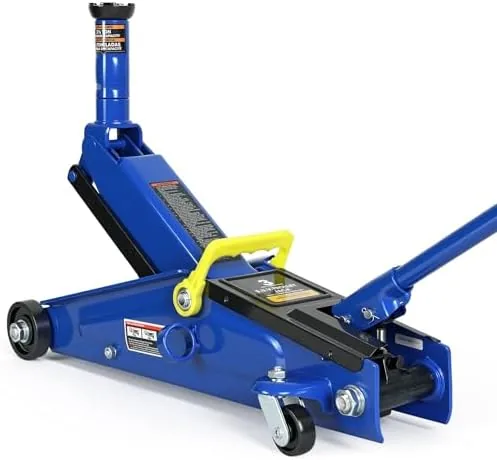
Jack Boss — Floor Jack
Jack Boss Floor Jack: Built for Home Mechanics and Shop Professionals Who Demand Reliability
Since 1954, Jack Boss has operated from Ontario, California with a singular mission — empowering automotive professionals and DIY enthusiasts with lifting equipment that exceeds industry standards. The brand emerged during America's golden age of automobile culture, when home mechanics first began taking vehicle maintenance into their own hands. Seven decades later, that founding commitment to reliability and safety remains the cornerstone of every Jack Boss floor jack that leaves the facility.
The target audience for Jack Boss equipment spans the full spectrum of automotive lifting needs. Home mechanics tackling weekend brake jobs and tire rotations find the dual piston quick lift technology transforms what used to be a laborious pumping exercise into rapid, efficient lifting. Professional auto repair shop technicians appreciate the ANSI/ASME PASE safety certification that meets insurance and workplace safety requirements. Motorcycle owners benefit from the specialized low-profile designs that accommodate the unique clearance challenges their bikes present.
What unites every Jack Boss customer is an understanding that lifting equipment represents a critical safety investment. These are tools that place thousands of pounds of vehicle weight within arm's reach of the user. The brand's automatic safety bypass valve technology and heavy-duty welded steel construction reflect a company that refuses to compromise on the fundamentals. For anyone who takes vehicle maintenance seriously, Jack Boss delivers the peace of mind that comes from professional-grade engineering.
From Racing Floor Jacks to Heavy-Duty Service Lifts: The Complete Lineup
The product range encompasses hydraulic floor jacks in capacities from 1.5 to 4 tons, addressing everything from compact sedans to full-size pickup trucks and SUVs. Low profile designs starting at 3.5 inches provide access under vehicles with sport suspensions, lowered configurations, or factory-low ground clearance that standard jacks simply cannot accommodate. This breadth ensures that one brand can serve an entire garage's worth of lifting requirements.
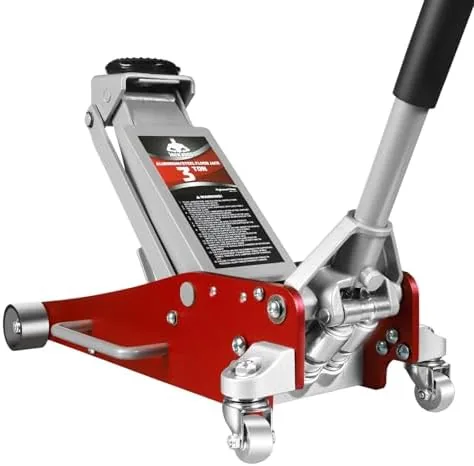
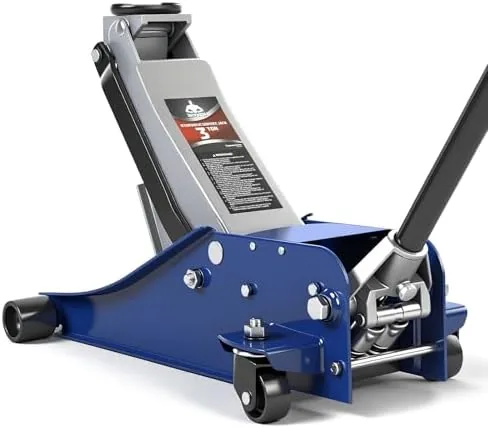
Racing floor jacks in the lineup combine aluminum and steel construction to balance weight savings with structural integrity. The Jack Boss 3 Ton Low Profile Racing Floor Jack weighs 58.5 pounds while handling 6,600 pounds of capacity, a ratio that speaks to intelligent material selection. Standard service jacks prioritize maximum durability with all-steel construction for shop environments where the jack sees daily use across multiple vehicles.
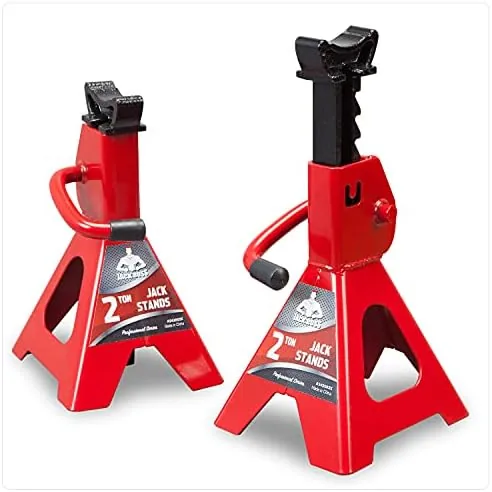
Supporting the floor jack lineup, the brand offers complementary equipment including jack stands rated at 2 tons per stand and universal rubber pad adapters for pinch weld protection. This ecosystem approach means customers can outfit their entire lifting setup from a single manufacturer, ensuring compatibility and consistent quality across every component that touches their vehicle.
The Dual Piston Quick Lift Pump System: Five Times Faster Than Single Pump Jacks
At the heart of Jack Boss engineering sits the proprietary dual piston hydraulic quick lift pump system. Traditional single piston floor jacks require numerous pumping strokes to raise a vehicle to working height. The dual piston design dramatically accelerates this process, achieving lifting speeds up to five times faster than conventional alternatives. For shop technicians processing multiple vehicles daily, this time savings compounds into hours of recovered productivity each week.
The automatic safety bypass valve represents the second pillar of the engineering philosophy. This mechanism activates automatically when overload conditions occur, preventing damage to both the hydraulic system and the user. Rather than relying on the operator to recognize when capacity limits approach, the jack itself provides built-in protection. This design choice reflects Jack Boss's understanding that real-world use often involves fatigue, distraction, or estimation errors that traditional jacks cannot forgive.
Drop forged alloyed materials and heavy-duty welded steel construction complete the engineering foundation. Every weld joint, pivot point, and load-bearing surface receives attention during manufacturing to ensure the finished product handles maximum capacity repeatedly without fatigue or failure. The combination of speed, safety, and structural integrity creates jacks that outperform across every metric that matters in professional and home garage applications.
Jack Boss Floor Jack Features That Define Professional-Grade Performance
- Dual Piston Quick Lift Technology Raises vehicles to working height in a fraction of the time required by single pump competitors, reducing physical effort and accelerating every maintenance task.
- Automatic Safety Bypass Valve Protects against overload conditions by automatically engaging when weight approaches capacity limits, preventing hydraulic damage and user injury.
- Low Profile Access Designs starting at 3.5 inches clear ground clearance, enabling use under lowered sport vehicles, sport utility vehicles, and factory-low sedans that defeat standard jacks.
- Heavy-Duty Welded Steel Construction Drop forged alloyed materials resist corrosion and withstand repeated maximum-load cycles without structural fatigue or joint failure.
- ANSI/ASME PASE Safety Certification Meets recognized industry safety standards required by professional shops and provides documented compliance for workplace safety requirements.
- Wide Lifting Range Models offer ranges from as low as 3-1/8 inches minimum to 21 inches maximum, accommodating everything from sports cars to lifted trucks with a single jack.
- Rubber Saddle Protection Included rubber saddles and available pinch weld adapters protect painted chassis surfaces and sensitive frame rails during lifting operations.
Customer Favorites: The Models Home Mechanics and Pros Reach For First
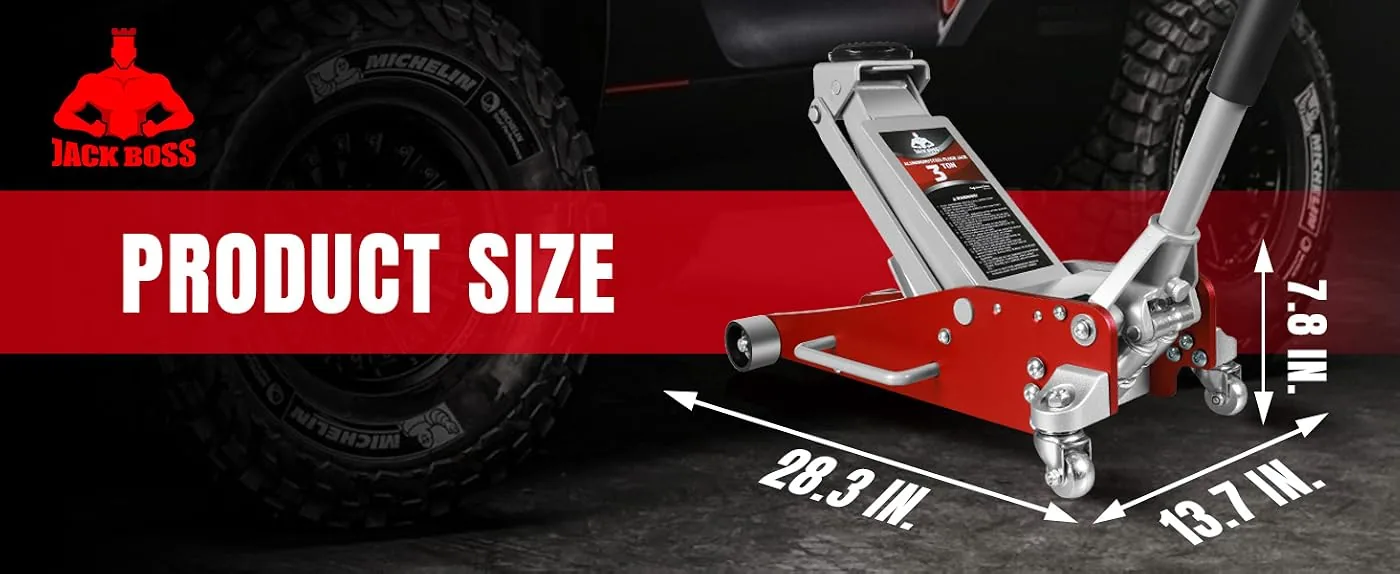
The Jack Boss 3 Ton Low Profile Aluminum and Steel Racing Floor Jack consistently ranks among the best-selling models for enthusiasts working on sport vehicles. With a minimum height of 3-15/16 inches and maximum reach of 18-5/16 inches, it slides under cars that leave competitors stuck. The 58.5-pound weight balances portability against stability, making it equally suitable for track day pit crew use and home garage brake jobs. The package includes a rubber saddle and two-piece handle, arriving ready for immediate service.
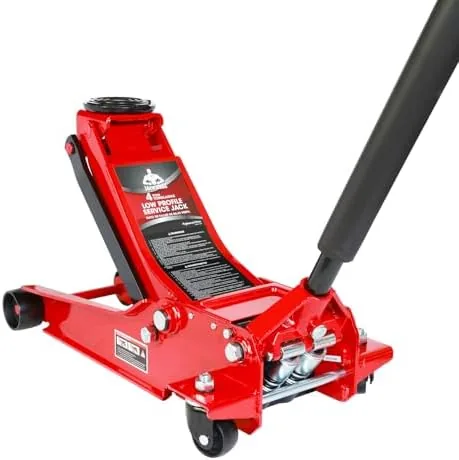
For shops prioritizing maximum capacity over weight savings, the 4 Ton Floor Jack with Dual Piston Quick Lift handles 8,800 pounds of heavy-duty lifting. This model serves general and industrial applications where SUVs, full-size trucks, and commercial vehicles rotate through service bays daily. The low profile design maintains accessibility despite the increased capacity, ensuring even lifted trucks can be serviced without supplemental ramps.
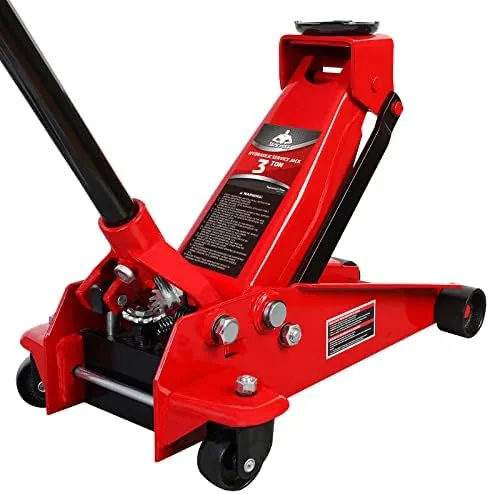
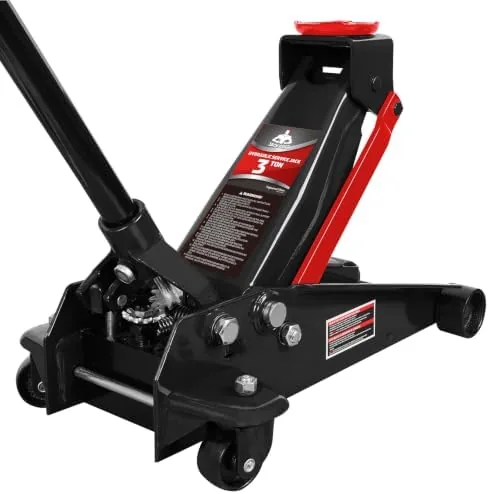
The Jack Boss 3 Ton Hydraulic Floor Jack with 3-1/8 inch minimum height and 20-inch maximum represents the sweet spot for versatility. Its lifting range spans nearly 17 inches, accommodating everything from slammed imports to stock SUVs without switching equipment. Combined with matching Jack Boss 2 Ton Jack Stands rated at 4,000 pounds per stand, customers build complete lifting setups that handle their entire vehicle stable.
Drop Forged Alloys and Welded Steel: Construction That Handles Maximum Loads
Material selection in floor jack manufacturing directly determines service life, safety margins, and day-to-day reliability. Jack Boss builds every unit using drop forged alloyed metals for critical load-bearing components. This forging process aligns the metal's grain structure to match stress patterns, producing parts significantly stronger than cast alternatives of identical geometry. The result is equipment that maintains integrity under repeated maximum-load cycles.
Heavy-duty welded steel construction joins these forged components into unified frames designed for decade-plus service lives. Each weld receives inspection to ensure penetration and consistency meet structural requirements. The steel formulation includes corrosion resistance properties that protect against the moisture, oils, and chemicals endemic to garage environments. Even jacks used in humid coastal climates or salt-belt winter conditions maintain their structural integrity season after season.
The hydraulic systems within each jack utilize precision-machined cylinders and quality seals that prevent the leakage issues plaguing inferior equipment. Clean hydraulic fluid translates directly to consistent lifting performance and long service intervals between maintenance. The attention to material quality extends throughout the entire assembly, from the chrome-plated pump pistons to the reinforced steel saddles that contact vehicle lift points.
From Tire Changes to Suspension Rebuilds: Real Results in Garage Environments
Performance validation happens not in engineering labs but in working garages where users depend on their equipment daily. Home mechanics report that the dual piston quick lift system transforms tire rotation from a dreaded chore into a straightforward task. What previously required twenty or more pumping strokes now needs fewer than eight. This efficiency gain becomes particularly noticeable when servicing multiple vehicles or completing jobs that require raising and lowering repeatedly.
Durability assessments from professional shops confirm that Jack Boss equipment handles the punishment of commercial use. Service bays processing dozens of vehicles weekly subject their jacks to conditions that expose any construction weaknesses within months. The heavy-duty welded frames and drop forged components maintain their geometry and hydraulic integrity under this sustained workload, justifying the investment through years of reliable service.
The low profile capability proves its value with increasing frequency as vehicle design trends continue pushing ground clearance lower. Owners of sport sedans, compact SUVs with aerodynamic underbody panels, and lowered enthusiast vehicles find that standard-height jacks simply cannot access their lift points. The 3.5-inch minimum clearance models solve this problem permanently, eliminating the need for ramps, blocks, or the dangerous practice of driving onto raised surfaces before jacking.
Using Your Jack Boss Floor Jack Safely: Proper Technique for Every Lift
- Surface Preparation Position the jack on solid, level concrete or asphalt. Soft ground, gravel, or inclined surfaces create instability that compromises safety regardless of jack quality.
- Lift Point Identification Consult vehicle owner's manual for factory-designated lift points. Using incorrect locations risks frame damage, pinch weld crushing, or unstable lifting geometry.
- Saddle Positioning Center the rubber saddle directly under the lift point before pumping. Offset contact increases stress on both jack and vehicle components.
- Controlled Pumping Use smooth, full pump strokes rather than short rapid movements. The dual piston system responds best to deliberate handle operation.
- Jack Stand Transfer Never work under vehicles supported only by a floor jack. Once raised, immediately position jack stands under secondary lift points and lower the vehicle onto them.
- Lowering Procedure Turn the release valve slowly to control descent speed. Rapid lowering stresses vehicle suspension components and risks losing saddle contact.
- Storage Position Store jacks fully lowered with the release valve slightly open. This prevents seal compression and maintains hydraulic system readiness.
Weight Ratings and Vehicle Compatibility: Understanding Capacity Specifications
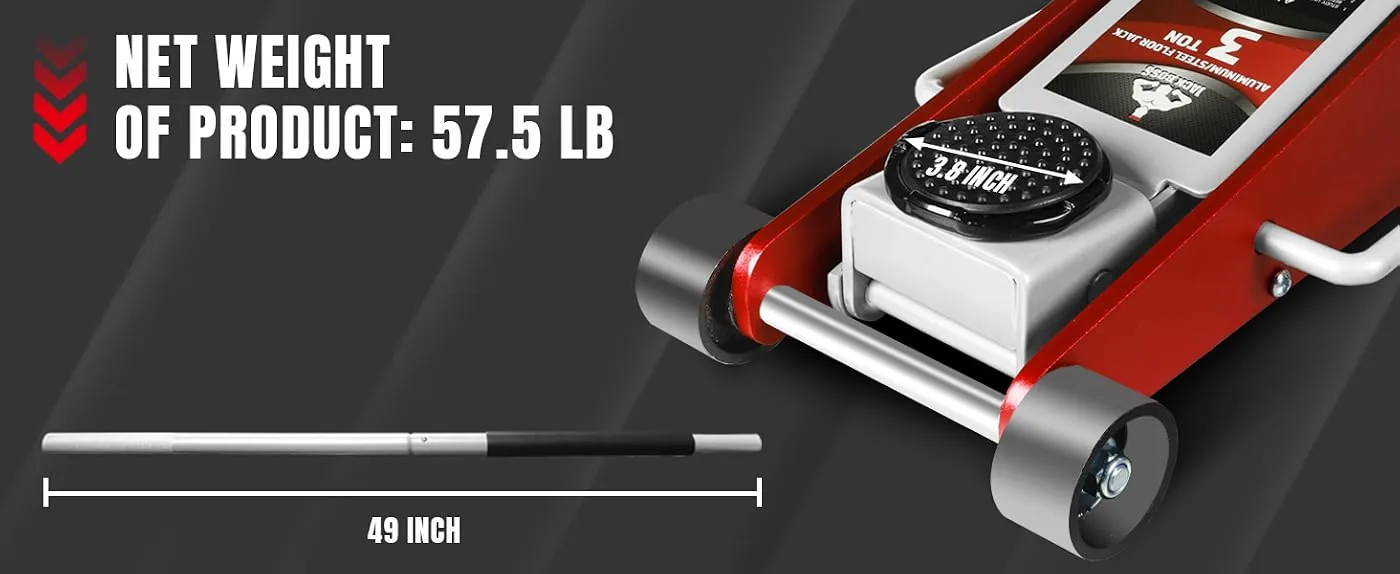
Every floor jack carries a rated capacity representing the maximum weight it can safely lift. This number applies to the entire vehicle weight, not just the portion being lifted. When positioning a jack under a front lift point, the rear tires remain on the ground supporting that end's weight. However, the jack must still be rated for total vehicle weight to maintain required safety margins during any lifting scenario, including those where the jack momentarily supports more weight during repositioning.
Vehicle weights vary dramatically across categories. Compact sedans may weigh under 3,000 pounds, making any Jack Boss 3-ton model more than adequate. Full-size SUVs and pickup trucks frequently exceed 5,000 pounds, pushing toward the 4-ton (8,800 pound) capacity units. Owners should verify their vehicle's gross weight from the door placard or owner's manual rather than estimating, as loaded cargo and accessories add significant undocumented weight.
Lift height range deserves equal attention during selection. The minimum height determines whether the saddle can reach under the vehicle's lift points in its normal stance. Sport vehicles and lowered builds require the ultra-low 3.5-inch minimum models. The maximum height dictates how high the vehicle rises, important for work requiring full wheel removal or access to suspension components. Matching both specifications to actual vehicle dimensions ensures the jack performs all required tasks.
The Ideal Jack for Weekend Warriors and Full-Time Technicians Alike
Perfect For Home Mechanics Who
- Perform their own tire rotations and brake maintenance
- Work on lowered or sport-suspension vehicles
- Want professional-quality equipment for their home garage
- Value safety certification for family vehicle work
- Need reliable lifting for oil changes and underbody inspections
Essential For Professional Technicians Who
- Service multiple vehicles daily and need fast lifting
- Require ANSI/ASME certification for shop compliance
- Handle everything from compact cars to heavy trucks
- Demand equipment durability under commercial workloads
- Need consistent hydraulic performance across years of use
Selecting the Right Floor Jack Model for Your Vehicle and Workspace
Choosing the appropriate model begins with honest assessment of the vehicles requiring service. A single-vehicle household with a midsize sedan has different requirements than a multi-vehicle garage including trucks, SUVs, and a sports car. The 3-ton capacity jacks handle most passenger vehicles with comfortable safety margins, while households including full-size trucks should consider the 4-ton option to maintain those margins under heavier loads.
Ground clearance measurements determine whether standard or low-profile models are necessary. Measure the distance between ground and the lowest lift point on each vehicle. If any measurement falls below 5 inches, the ultra-low profile models with 3.5-inch minimum heights become essential. Sport suspension cars, vehicles with aftermarket lowering springs, and some factory sport models routinely present clearances under 4 inches.
Workspace considerations include both storage and deployment. The aluminum and steel racing models offer weight savings beneficial for users who transport their jacks between locations. All-steel service jacks provide maximum durability for permanent shop installation where weight is irrelevant. Handle length affects pumping leverage and storage footprint. The two-piece handles included with most models balance these factors while keeping packaging dimensions reasonable for shipping.
Budget alignment matters, but the calculation should factor total cost of ownership rather than purchase price alone. Quality equipment lasting fifteen years costs less annually than cheap alternatives replaced every two or three. The safety certification, superior materials, and warranty protection built into every Jack Boss unit justify the investment through years of reliable, secure service.
Jack Boss Floor Jack vs. Competitors: Feature Comparison
| Feature | Jack Boss | Pittsburgh (Harbor Freight) | Torin Big Red |
|---|---|---|---|
| Pump System | Dual piston quick lift | Single piston standard | Single piston standard |
| Maximum Capacity (3-ton models) | 6,600 lbs | 6,000 lbs | 6,000 lbs |
| Minimum Lift Height | 3.5 inches (low profile) | 5.5 inches typical | 5.3 inches typical |
| Maximum Lift Height | Up to 21 inches | Up to 19 inches | Up to 18 inches |
| Frame Construction | Heavy-duty welded steel, drop forged alloys | Stamped steel | Welded steel |
| Safety Certification | ANSI/ASME PASE certified | Not certified | Not certified |
| Automatic Overload Protection | Yes, bypass valve | No | No |
| Warranty | 1-year manufacturer warranty | 90 days | 1 year limited |
| Rubber Saddle Included | Yes | Yes | Yes |
Specifications compared for similarly priced 3-ton models. Always verify current specifications before purchase.
Maintaining Hydraulic Performance: Care Routines That Extend Service Life
Regular maintenance preserves the lifting performance and safety features built into every unit. Begin with visual inspection before each use, checking for hydraulic fluid leaks around cylinder seals and pump housing. Small weeps indicate seals requiring replacement before progressing to failure. Catching these early prevents the sudden loss of lift that strands vehicles in raised positions.
Hydraulic fluid level checks should occur monthly for regularly used jacks or before any use following extended storage. Most models include fill plugs accessible after saddle removal. Use only hydraulic jack oil specified in the manual. Automatic transmission fluid or other substitutes lack the proper viscosity and additive packages, accelerating seal wear and degrading lifting performance.
Clean the saddle contact surface and lift arm pivot points after each use to prevent debris accumulation. Grit trapped in these areas accelerates wear on moving components and can transfer to vehicle underbodies. A simple wipe with a shop rag removes most contamination. Periodic application of light machine oil to pivot points maintains smooth operation and prevents corrosion in these high-stress joints.
Storage practices significantly impact long-term reliability. Keep jacks in dry locations away from direct moisture exposure. Store in the fully lowered position with the release valve slightly open to relieve pressure on internal seals. These simple habits prevent the seal compression and corrosion that sideline neglected equipment.